
From first workflows to growing research communities

Research data infrastructure creates value when it moves into active use.
These examples show how glaidedata supports adoption in different research environments — from a first productive workflow to consortium-wide infrastructure and wider community adoption.

Research Group ·

From vision to first success
The research group already had a clear FAIR data vision and strong motivation to work with NOMAD. The challenge was turning that ambition into productive use without getting stuck in infrastructure and implementation decisions.
We helped define a realistic first scope, establish a best-practice NOMAD Oasis, evaluate existing community solutions and implement the first scientific workflow. This first implementation created a practical foundation for further development, reuse and engagement with the wider NOMAD community.

Project journey
Outcomes
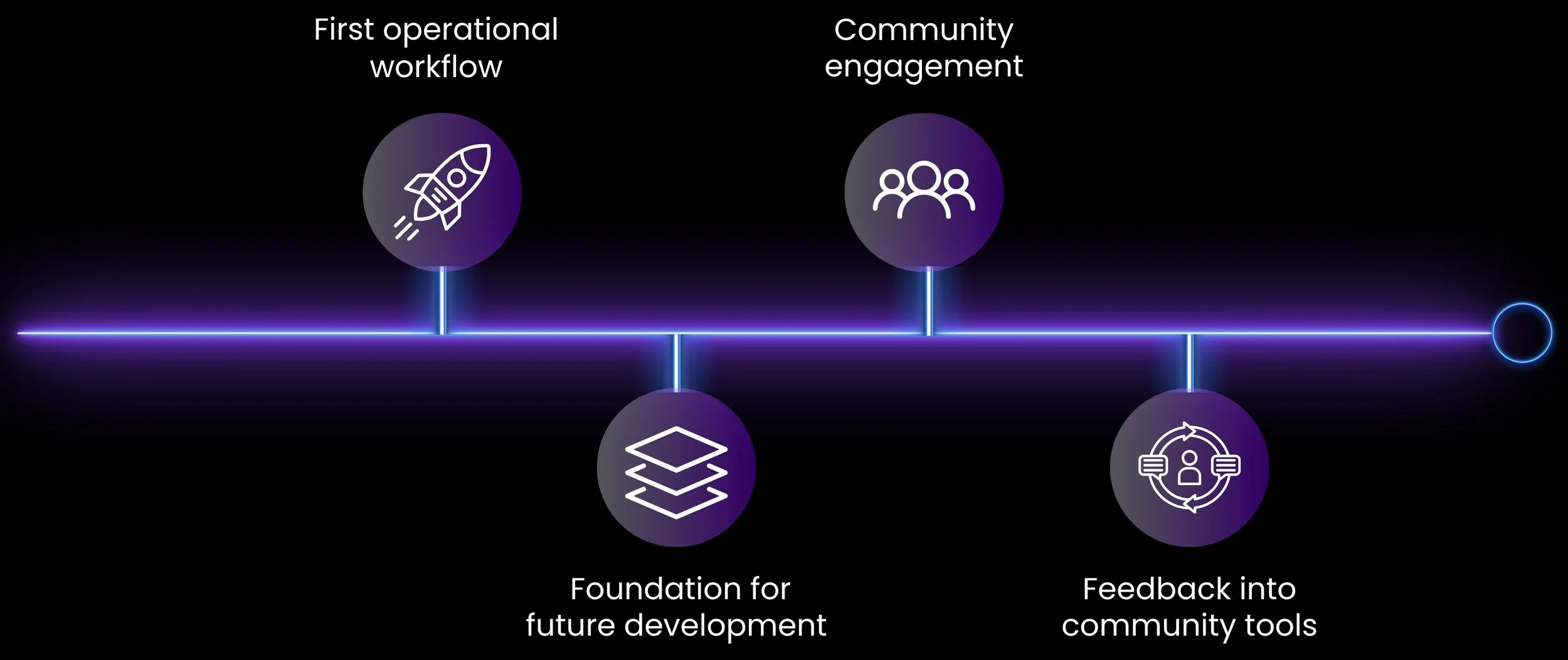
Early success creates momentum.
1.5 months
Consortium ·
From platform selection to consortium adoption
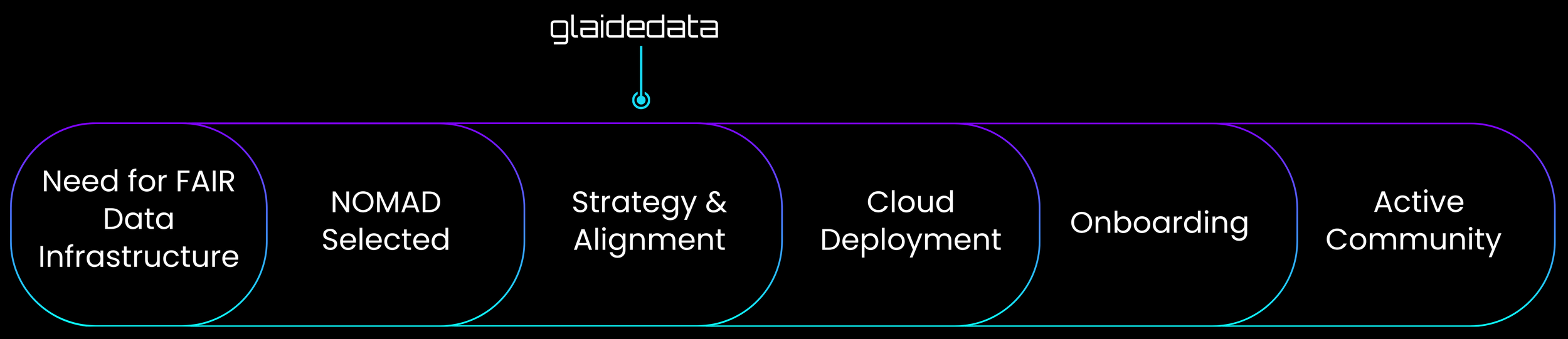
iENTRANCE had already selected NOMAD as part of its FAIR data infrastructure. The challenge was turning that decision into a working environment across multiple institutes, existing systems and many stakeholders.
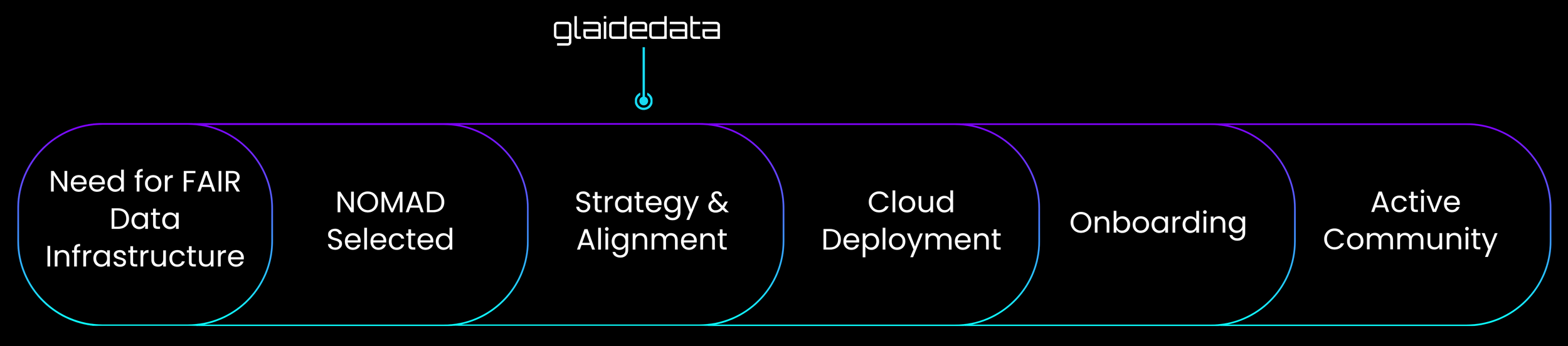
We supported strategy and alignment, cloud deployment, infrastructure integration, onboarding and community building. The result was not only a hosted NOMAD Oasis, but an environment that could be actively introduced and used across the consortium.
Project journey
Outcomes
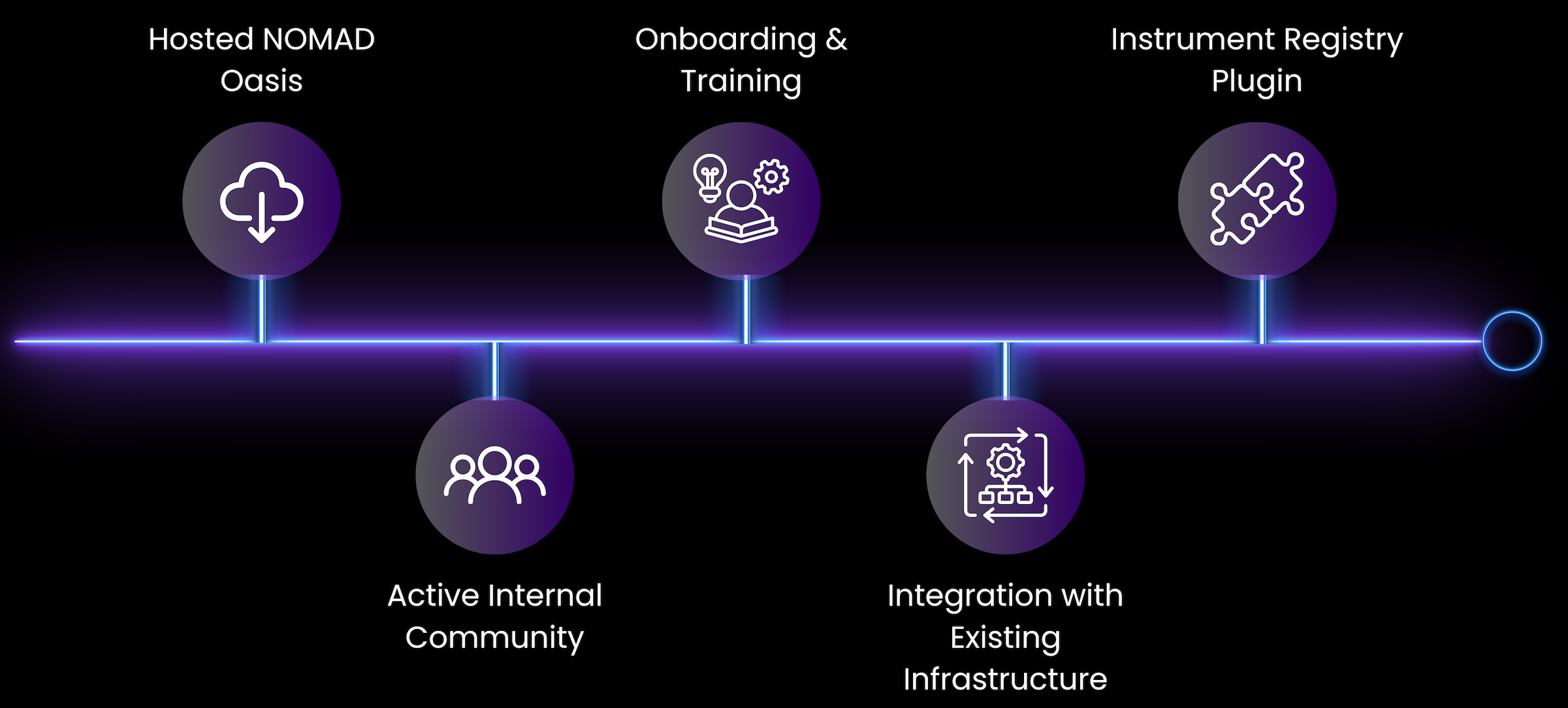
At consortium scale, coordination, communication and community become just as important as technology.
6 months
Research Network ·
From successful users to community adoption
SolarTAP starts from a different point: proven NOMAD tools and workflows already exist within parts of the photovoltaics community. The challenge is helping these solutions spread beyond the groups that originally developed them.
We support this transfer by connecting existing expertise with new adopters, helping lower adoption barriers and enabling proven workflows and practices to be reused across laboratories and organizations.
Project journey
Outcomes
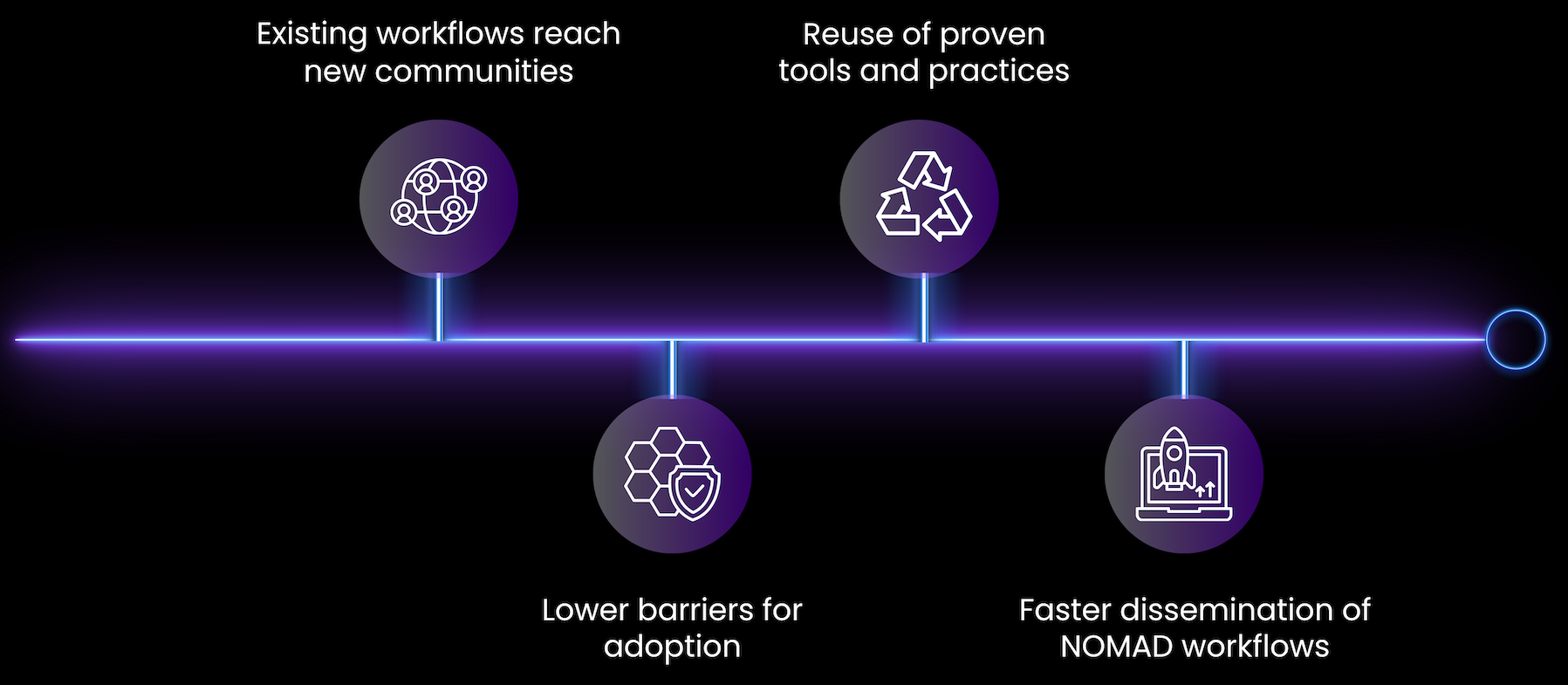
Sharing a tool is not the same as adopting a tool.
Different starting points.
The same principles.
Across these environments, successful adoption follows similar principles: start with real research needs, lower technical barriers, reuse what already works and support the people who make adoption sustainable.
Where does your organization start?
Whether you are introducing a first productive workflow, scaling infrastructure across an organization or helping proven solutions reach a wider community, we can help identify a practical next step.